Mining for War: Assessing the Pentagon’s Mineral Stockpile
How can the Pentagon’s energy transition mineral stockpiles be repurposed toward the green transition?
The Pentagon is rapidly expanding its stockpile of the so-called “critical minerals” it deems essential for military industries. Many of these same materials—known as energy transition minerals (ETMs)—are vital components of renewable energy technologies, raising urgent questions about how resources are allocated and for what interests. When industrial strategy is shaped by military and national security priorities, it entrenches geopolitical conflict and distorts pathways for equitable climate action, redirecting public resources and state capacity away from the broader demands of rapid and just decarbonization. The materials essential to the energy transition should accelerate decarbonization, not feed an insatiable war machine. This brief demonstrates how the Pentagon’s role in mineral supply chains, particularly through stockpiling, challenges the global energy transition.
In this brief we find that:
1. Since the passage of the One Big Beautiful Bill Act, which earmarked billions of dollars to bolster the National Defense Stockpile, the Pentagon has solicited contracts to stockpile a growing list of critical minerals, including several materials essential to the energy transition.
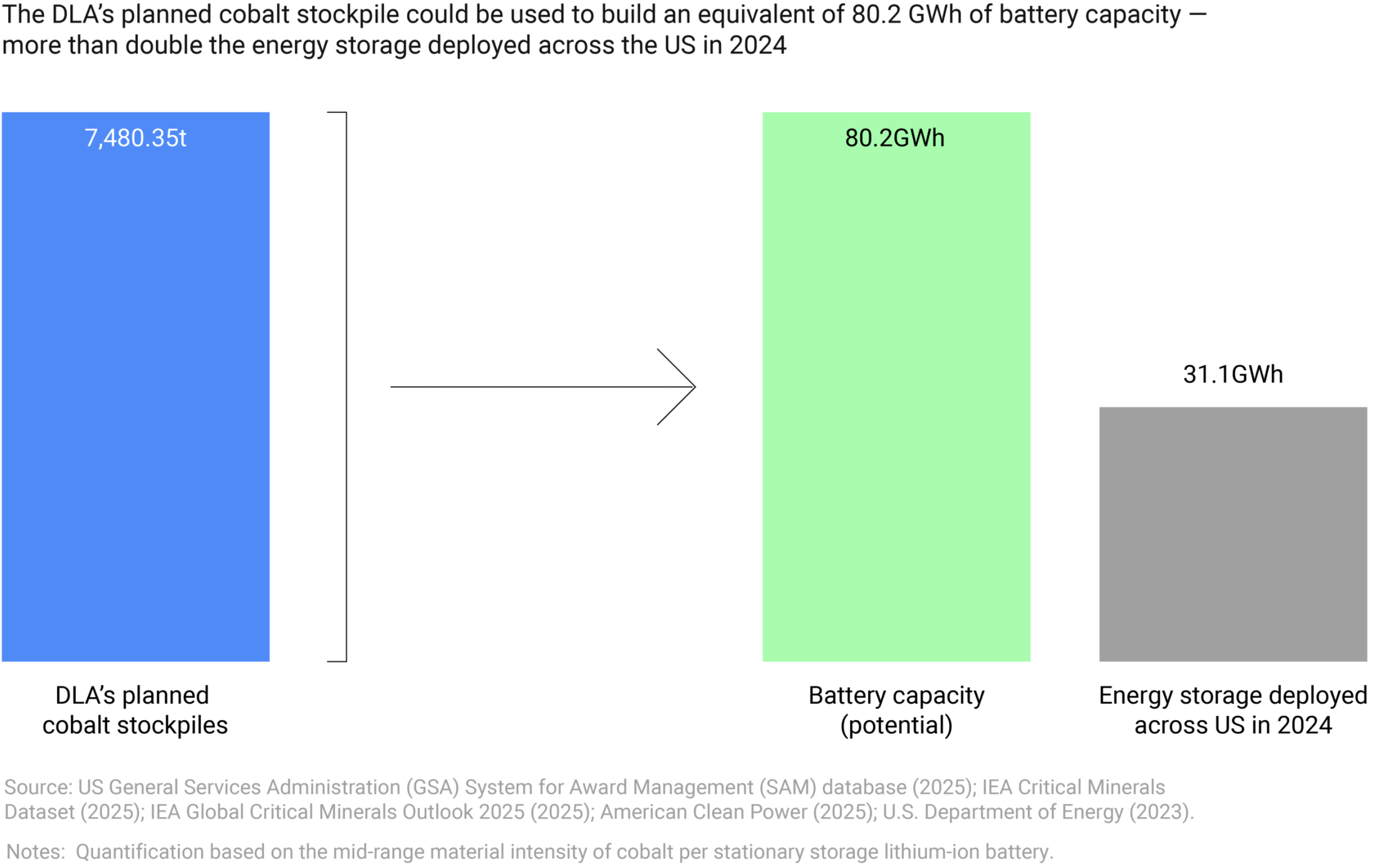
2. The Pentagon plans to stockpile almost 7,500 metric tons of cobalt. That amount of cobalt could be used instead to produce 80.2 gigawatt hours of battery capacity—more than double existing energy storage.
Potential Grid Battery Storage Expansion from Cobalt Stockpile
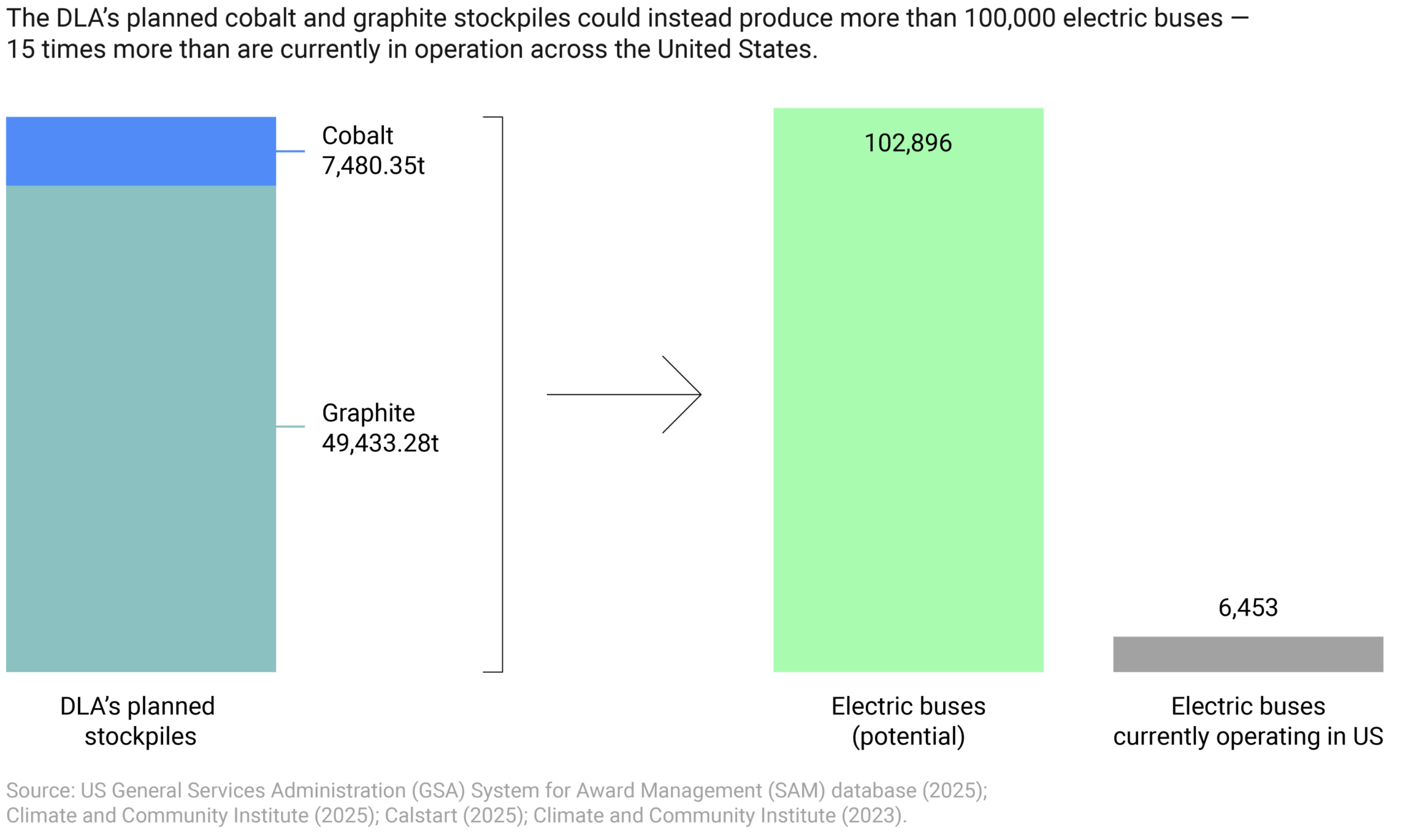
3. The DLA’s planned cobalt and graphite stockpiles could be used instead to produce approximately 100,000 electric buses—fifteen times more than are currently in operation across the United States.
Cobalt and Graphite Stockpiles Could Electrify US Transit
Recommended policy approaches
- Curb excessive demand: Implement policies that promote recycling and reduce mineral demand overall. Regulate and reduce demand from sectors with high mineral intensity and environmental impact, such as military activities and data centers, to alleviate pressure on transition mineral resources.
- Embed justice and accountability: Enforce labor, environmental and Free, Prior and Informed Consent (FPIC) conditions on all public procurement contracts for minerals and technologies,
promoting social and ecological responsibility throughout supply chains. - Democratize resource governance: Establish transparent, civilian-led industrial policy tools to stabilize markets, safeguard supplies, serve the public interest and ensure equitable access to transition minerals. Reform emergency powers to align with civilian climate goals.
- Foster global solidarity: Build international cooperation, including coordination with China on climate technology collaboration to reduce duplication in supply chains, lower mining demand and ease geopolitical tensions impacting mineral markets.
